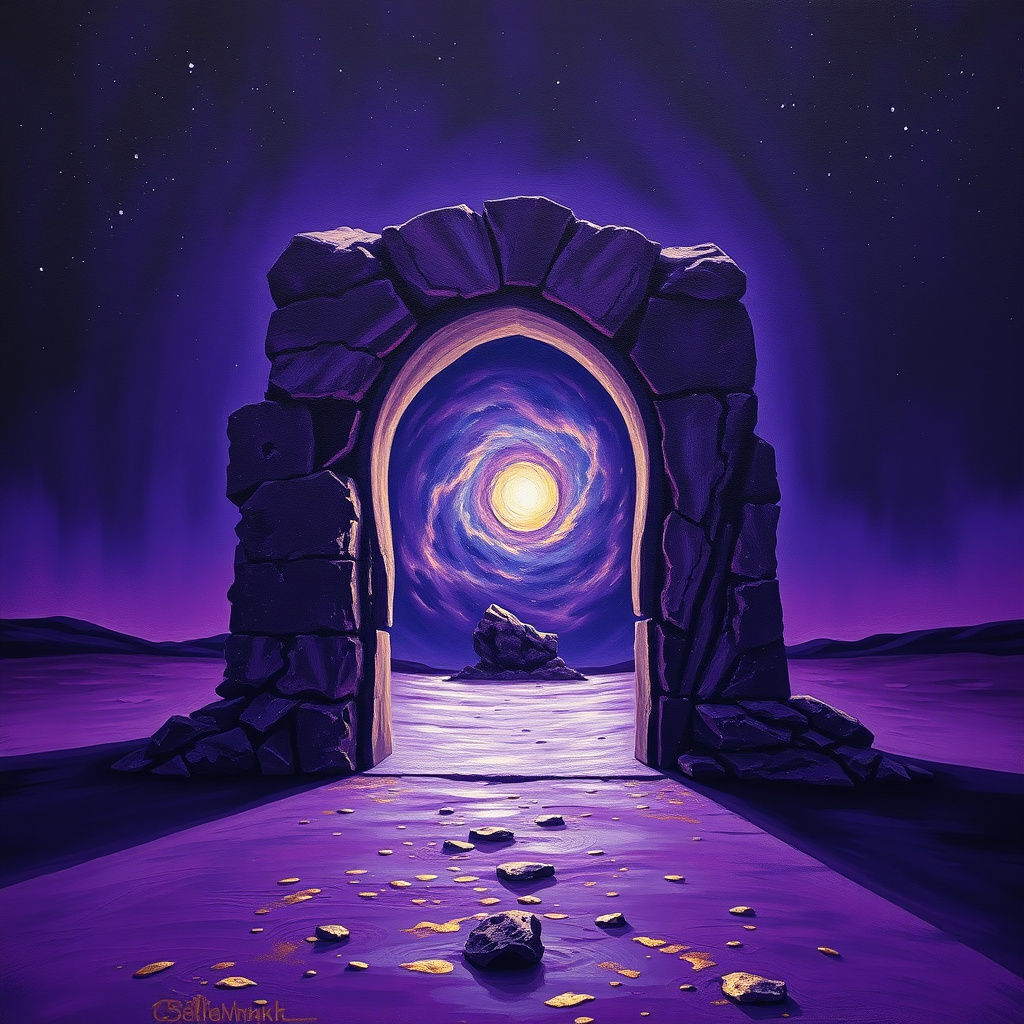
Death Dream Meaning: A Jungian Archetypal Analysis
Explore the psychological depth of dreaming about death. Understand how this symbol functions as a Jungian archetype within the process of individuation.
When the psyche presents the image of Death, it is rarely a literal premonition. Instead, within the framework of analytical psychology, Death serves as a potent archetype of the collective unconscious. To dream about death is to witness the psychic necessity of cessation. It is the boundary where one psychological state ends to allow for the emergence of another. Rather than focusing on physical mortality, we must examine Death as a structural mechanism of the soul—a force that facilitates the movement of the ego toward a more integrated, whole self through the dissolution of outdated psychic structures.
What does your Death dream mean?
What is the primary tone of the death in your dream?
Death as the Catalyst for Individuation
In Jungian theory, the process of individuation—the lifelong journey toward becoming one's true, whole self—requires the periodic destruction of the ego's rigid defenses. When you encounter Death in a dream, you are often witnessing the psyche's attempt to dismantle a persona or a set of behaviors that no longer serve the totality of the personality. This is not a tragedy, but a biological and psychological necessity. Just as a forest requires periodic fires to clear old growth and allow new life to sprout, the psyche utilizes the archetype of Death to clear away the 'psychic debris' of the past. If the ego clings too tightly to a specific identity, an outdated social role, or a narrow worldview, the unconscious may employ the symbol of Death to force a confrontation with the inevitability of letting go. This tension between the ego’s desire for permanence and the psyche's drive toward expansion is a central conflict in human development. The dream does not signal an end to existence, but rather the end of a specific mode of being. By confronting the symbol of Death, the dreamer is invited to recognize which parts of their current identity have become stagnant or necrotic. This psychological 'dying' is a prerequisite for the birth of a more complex and nuanced consciousness. Without the capacity to experience symbolic death, the individual remains trapped in a repetitive, unexamined cycle of existence, unable to integrate the new complexities that the maturing soul demands. Thus, Death acts as the ultimate engine of psychic evolution, ensuring that the individual does not become a fossilized version of their former selves.
The Shadow and the End of the Persona
The archetype of Death is frequently intertwined with the Shadow—the hidden, unacknowledged aspects of the personality that the ego refuses to own. When a dream features the death of a specific figure or a perceived entity, it often represents the forced integration of Shadow material. For instance, if a person dreams about the death of a family member, the Jungian perspective suggests this may not be about the person themselves, but about the specific qualities that person represents within the dreamer's internal landscape. If a family member embodies a certain authority or a specific moral rigidity, their 'death' in the dream signifies the ego's struggle to relinquish that borrowed authority and instead find its own autonomous center. Furthermore, Death often marks the collapse of the Persona—the social mask we wear to satisfy the expectations of the collective. When the Persona is 'killed' in the dream state, the psyche is stripping away the artificial layers of social performance to reveal the raw, unvarnished truth of the underlying self. This can be a terrifying experience for the ego, which relies on these masks for security and social validation. However, the destruction of the Persona is essential to prevent the individual from becoming entirely lost in social roles. The death of the mask allows the Anima or Animus—the internal feminine or masculine archetypes—to emerge from the depths of the unconscious and begin their work of balancing the psyche. In this sense, Death is the shadow's way of clearing the stage, ensuring that the artificial does not permanently stifle the authentic.
Collective Unconscious and the Archetype of Finality
To understand why people dream about death so frequently, one must look beyond the individual biography and toward the collective unconscious. Death is a universal archetype, a primordial pattern shared by all humanity regardless of culture or era. It represents the fundamental tension between being and non-being, a concept that is hardwired into the human psyche. When a dreamer experiences a profound dream about death, they are tapping into this deep, ancestral well of meaning. This connection to the collective unconscious explains why the symbol carries such immense weight and emotional gravity; it is not merely a personal fear, but a confrontation with the most profound mystery of the human condition. From a depth psychology standpoint, the recurring nature of these dreams often indicates that the dreamer is undergoing a significant structural shift in their psychic architecture. If one asks why they dream about death so much, the answer often lies in a state of prolonged psychological transition. The psyche is attempting to process a massive influx of new information or a fundamental shift in values that the conscious mind is not yet ready to accept. The archetype of Death serves as a bridge between the known and the unknown, the conscious and the unconscious. It provides a symbolic language for the experience of 'vanishing'—the feeling of losing one's grip on an old reality. By engaging with this archetype, the individual begins to move from a state of ego-centricity toward a more cosmic, orophant-centered awareness. This transition acknowledges that the individual is part of a larger, eternal cycle of emergence and recession, a realization that is central to achieving psychological maturity and spiritual depth.
Frequently Asked Questions
What does it mean when you dream about death of a family member?
In a Jungian context, this rarely relates to the actual person. Instead, the family member often functions as a symbol for a specific psychic quality or a developmental stage the dreamer is leaving behind. Their death represents the internal dissolution of the traits they embody, allowing the dreamer to move toward greater psychological autonomy.
Why do I dream about death so much?
Frequent dreams of death often suggest that your psyche is in a state of intense, ongoing restructuring. It indicates that the ego is facing repeated challenges to its current identity or defense mechanisms. The recurrence is a signal from the unconscious that a significant process of individuation is demanding your attention.
What does it mean to dream about death of a child?
A child in a dream often represents the 'divine child' archetype—the potential for new growth, spontaneity, and future possibilities. The death of a child symbolises the loss or the necessary sacrifice of a new idea, a burgeoning aspect of the self, or a period of innocence that must end for maturity to occur.