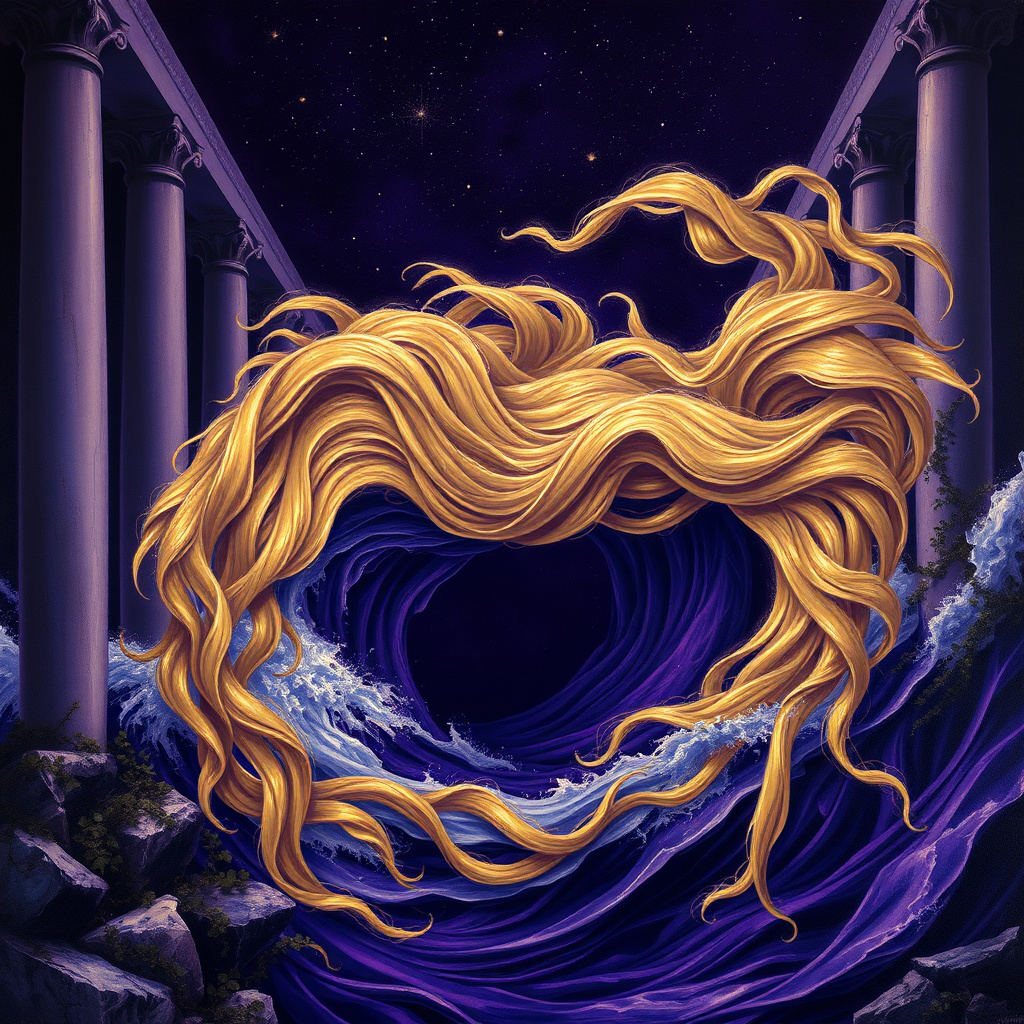
Hair Symbolism: Ancient Myths, Folklore, and Sacred Traditions
Explore the cultural and mythological significance of hair. From Biblical strength to folklore, discover what hair signifies in ancient world narratives.
Across the tapestry of human history, hair has functioned as more than a physical attribute; it serves as a conduit for divine power, a mark of social hierarchy, and a vessel for ancestral spirits. In many ancient civilizations, the state of one's hair dictated their standing before the gods or their readiness for ritualistic duty. Whether viewed as a crown of vitality or a sign of spiritual mourning, hair carries a weight of historical narrative that transcends simple biology. To encounter hair in the realm of the subconscious is to engage with a lexicon of mythic archetypes and sacred traditions.
What does your Hair dream mean?
What is the primary state of the hair?
The Divine Mantle and Sacred Vigor
In the annals of ancient mythology, hair often acts as a physical manifestation of an individual's connection to the divine or their inherent life force. The most prominent archetype is found in the biblical accounts of Samson, where the length and integrity of his hair were inextricably linked to his covenant with the Almighty. In this cultural context, hair is not merely keratin, but a tether to supernatural strength; to lose it is to sever the connection to the sacred. Similarly, in various Eastern traditions, long, flowing hair is often associated with asceticism and the cultivation of spiritual energy, where the physical length mirrors the depth of one's meditative reach. In Greek lore, the tresses of certain deities or heroes could possess qualities of terror or enchantment, acting as a visual herald of their otherworldly nature. When one observes hair growing long in a mythic context, it is often interpreted as the accumulation of merit or the expansion of one's spiritual dominion. Conversely, the sudden appearance of hair in unexpected places or its excessive growth can signal a person becoming overwhelmed by the primal, untamed forces of nature. This perspective views hair as a living extension of the soul's potency, a visible aura that signals to the community whether a person is currently walking in favor with the spirits or if their internal vitality is expanding to meet a grander destiny. It is a crown that is both earned and bestowed by the cosmic order, serving as a silent witness to the wearer's spiritual status within the grand design of the universe.
Ritualistic Loss and the Mark of Mourning
Throughout various cultural epochs, the act of cutting or losing hair has served as a profound ritual of transition, often signaling a descent into grief, penance, or a change in social caste. In many tribal traditions, the shedding of hair—whether through natural loss or intentional cutting—is a public declaration of a life-altering event, such as the death of a kinsman or the end of a period of servitude. In some Islamic interpretations and historical Middle Eastern customs, the management of hair carries specific weight regarding modesty, piety, and the observance of sacred law. The sudden loss of hair, such as hair falling out in clumps, resonates with ancient archetypes of decay and the stripping away of worldly vanity. In folklore, a person experiencing sudden hair loss might be seen as having been touched by a curse or having lost their protective aegis against malevolent entities. The ritualistic cutting of hair is also a common theme in tales of fallen nobility or disgraced warriors; to have one's hair shorn is to be stripped of one's identity and rank, reducing a sovereign to a commoner. This loss is not merely aesthetic but ontological, representing a fundamental shift in how the individual exists within the social and spiritual hierarchy. Even in literature, the removal of hair often precedes a period of profound testing or a descent into a shadow-self, mirroring the ancient practice of shaving the head to signify a break from the past and a rebirth into a new, often more humbled, state of being. Thus, the absence of hair is frequently a narrative marker for the end of an era or the onset of a period of profound spiritual reckoning.
The Tangled Web of Omens and Taboos
In the realm of folklore and superstition, hair often takes on a more chaotic and unsettling role, serving as a medium for omens or a source of profound discomfort. The presence of hair in places it does not belong, such as hair coming out of the mouth, is a recurring motif in various folk tales, often used to signify a person being 'consumed' by their own words or by a parasitic spiritual influence. In many cultures, hair is believed to trap essence or memories; therefore, tangled or unruly hair can be seen as a sign of a cluttered or haunted spirit. The concept of hair being on fire in mythic storytelling often serves as a violent omen of sudden passion, destruction, or the wrath of a deity, signaling a life that is being consumed by an uncontrollable elemental force. Furthermore, the texture and movement of hair in folklore can dictate the nature of a prophecy. Fine, silken hair might herald a period of grace, while coarse, matted hair might suggest a period of hardship or social isolation. In some Asian ancestor traditions, the care of hair is a way of honoring the lineage, and any disruption to its natural state is seen as a disturbance in the ancestral flow. These cultural narratives suggest that hair is a highly sensitive instrument, capable of reflecting the invisible tensions between the human world and the spirit realm. Whether it is the strangling sensation of hair in the mouth or the terrifying spectacle of hair falling away, these occurrences are treated not as biological anomalies, but as urgent communications from the unseen world, demanding attention, ritual cleansing, or immediate spiritual realignment to restore the cosmic balance.
Frequently Asked Questions
What does it mean when you dream about hair falling out?
From a mythological perspective, hair falling out often signifies a loss of divine protection or a stripping of one's social status. In many ancient cultures, this represents a period of mourning or the removal of a person's spiritual 'crown,' suggesting a time when one is vulnerable to the whims of fate or the influence of lesser spirits.
What is the spiritual meaning of a female dream about hair loss?
In various folklore traditions, hair is linked to a woman's connection to her ancestral lineage and her life force. A dream regarding hair loss can be interpreted as a sign of a spiritual transition, where old identities or ancestral ties are being shed to make way for a new, albeit more humbled, spiritual state or a period of penance.
What does it mean to dream about hair growing long?
Dreaming of hair growing long is often seen as a positive omen in ancient narratives, signifying an accumulation of spiritual merit, wisdom, or power. It mirrors the growth of a hero's legend or the expansion of a sage's influence, suggesting that one's internal vitality and connection to the sacred are flourishing.
What does it mean when I dream about hair in my mouth?
In folk belief, hair in the mouth is a potent symbol of being 'choked' by one's own words or by external spiritual influences. It is often interpreted as a warning that one's speech is causing harm or that a person is being consumed by a chaotic, unmanageable force that disrupts their ability to communicate with the divine.